


What is SAP FICO?
SAP FICO (SAP Finance and SAP Controlling) is a core functional component of SAP ERP that enables organizations to manage financial operations, accounting processes, and cost control from a single integrated platform. It helps businesses maintain accurate financial records, generate financial statements, streamline reporting, and support informed business planning and strategic decision-making.
As part of SAP ERP Central Component (SAP ECC), SAP FICO plays a critical role in financial accounting and controlling. It integrates seamlessly with other SAP business modules, ensuring financial data flows consistently across departments and business functions.
Components of SAP FICO
SAP FICO consists of two tightly integrated components, each serving a distinct purpose within an organization's financial ecosystem:
- SAP Finance (FI): Focuses on financial accounting, statutory reporting, accounts management, and maintaining accurate financial records.
- SAP Controlling (CO): Concentrates on internal cost management, budgeting, profitability analysis, and performance monitoring to support business decisions.
Integration with Other SAP Modules
One of SAP FICO's greatest strengths is its seamless integration with various SAP Logistics and operational modules, enabling end-to-end business process management across the enterprise.
- Sales and Distribution (SD)
- Production Planning (PP)
- Plant Maintenance (PM)
- Quality Management (QM)
- Materials Management (MM)
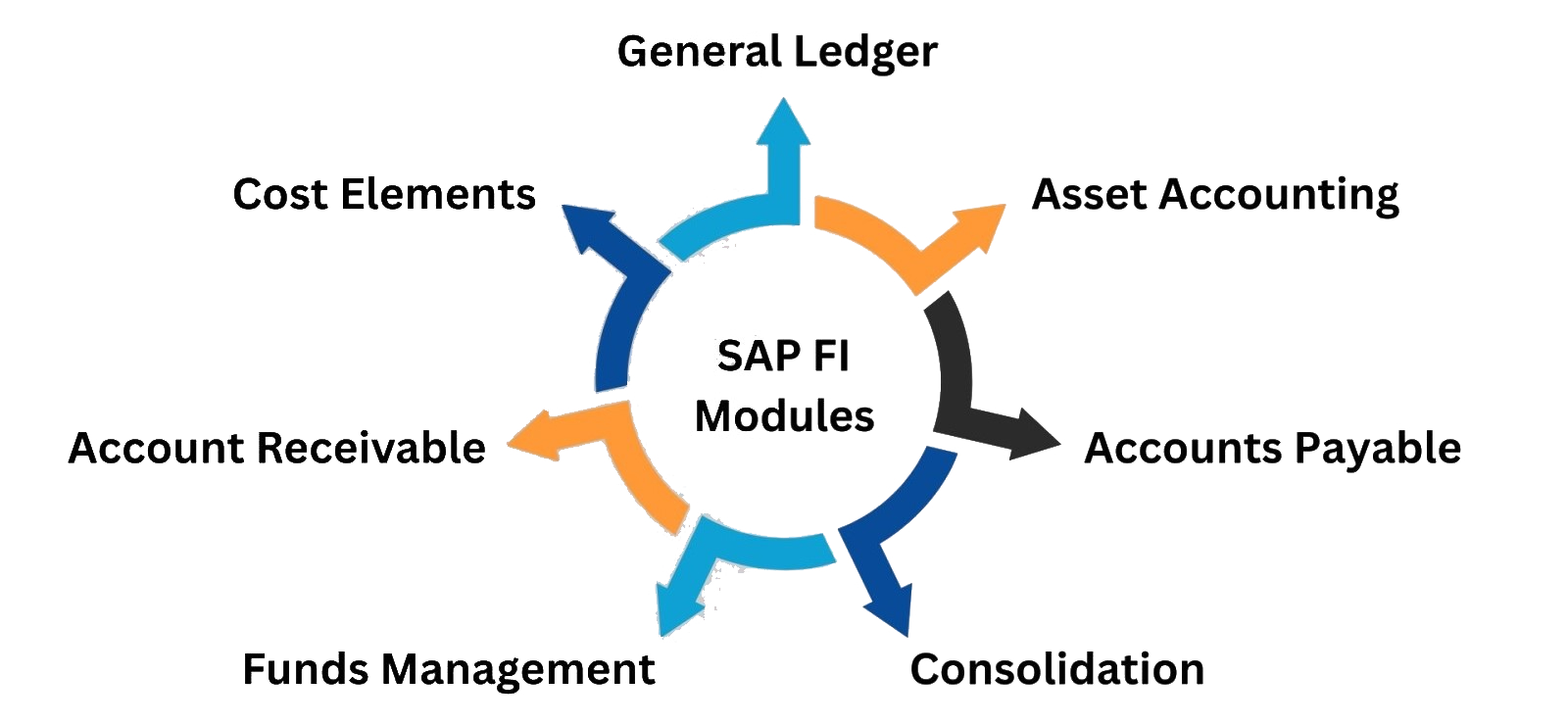
Key SAP FI Modules
SAP FI comprises several sub-modules that manage different aspects of financial accounting and reporting:
- General Ledger (GL): Maintains the organization's complete financial transaction records and chart of accounts.
- Accounts Receivable (AR): Manages customer invoices, payments, credit memos, and customer account balances.
- Accounts Payable (AP): Handles vendor invoices, payments, and supplier account management.
- Asset Accounting: Tracks fixed assets, acquisitions, depreciation, transfers, and disposals.
- Bank Accounting: Records and reconciles bank transactions with organizational financial records.
- Consolidation: Combines financial statements from multiple business entities into a unified report.
- Funds Management: Supports budget planning, allocation, and monitoring of organizational funds.
- Special Purpose Ledger: Creates customized ledgers to meet specific reporting requirements.
- Travel Management: Manages employee travel expenses, reimbursements, and related financial transactions.
Key SAP CO Modules
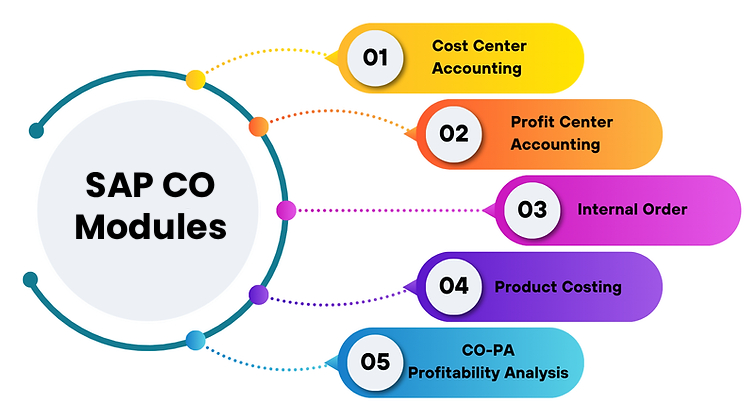
SAP CO helps organizations monitor operational costs, evaluate profitability, and improve financial performance through detailed cost analysis and planning.
- Cost Element Accounting: Classifies and tracks the origin of organizational costs and revenues.
- Cost Center Accounting: Monitors expenses incurred by departments such as Sales, Production, Marketing, and Human Resources.
- Profit Center Accounting: Evaluates profitability across business units by tracking both revenues and expenses.
- Internal Orders: Controls and monitors costs for short-term projects and internal business activities.
- Profitability Analysis (CO-PA): Analyzes product, customer, market, and regional profitability to support strategic planning.
- Product Costing: Calculates manufacturing and production costs to improve operational efficiency and pricing decisions.
Why Organizations Use SAP FICO
Organizations across industries rely on SAP FICO to automate financial processes, improve reporting accuracy, ensure regulatory compliance, optimize cost management, and provide real-time financial insights. Its integration with other SAP modules enables businesses to maintain a unified view of financial and operational data, supporting better decision-making and long-term business growth.
Source : Tech Target